Introduction
A low credit score doesn’t have to prevent you from achieving your financial goals. Whether your credit was affected by missed payments, medical bills, job loss, or unexpected financial challenges, the right credit card can help you rebuild your credit history over time.
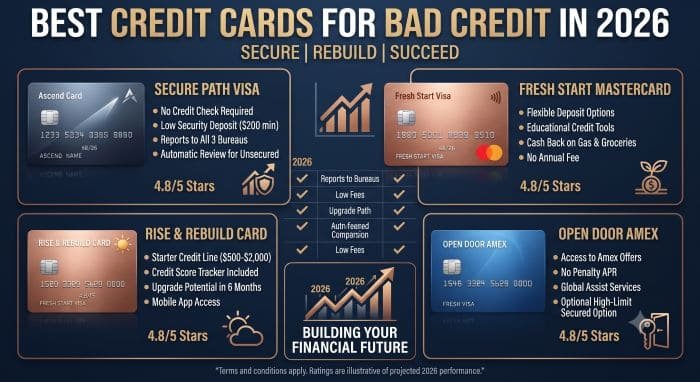
Many of the best credit cards for bad credit in the USA are designed to help consumers improve their credit scores through responsible use. Some require a refundable security deposit, while others offer unsecured credit with no deposit for qualified applicants.
In this guide, you’ll learn how credit-building cards work, how to choose the right one, and the best strategies for improving your credit score in 2026.
Why Your Credit Score Matters
Your credit score affects many aspects of your financial life, including:
- Credit card approvals
- Auto loan interest rates
- Mortgage eligibility
- Personal loan approvals
- Apartment rental applications
- Insurance premiums in some states
Improving your credit score can save you thousands of dollars over time.
Understanding Secured Credit Cards
How Secured Credit Cards Work
A secured credit card requires a refundable security deposit, which usually becomes your credit limit.
For example:
- Deposit $200
- Credit Limit $200
Unlike prepaid cards, secured cards report your payment history to the three major U.S. credit bureaus:
- Experian
- Equifax
- TransUnion
Making on-time payments and keeping your balance low can gradually improve your credit score.
Benefits of Secured Credit Cards
- Easier approval
- Helps rebuild credit
- Reports to major credit bureaus
- Refundable security deposit
- Opportunity to graduate to an unsecured card
Best Unsecured Credit Cards for Bad Credit
Some lenders offer unsecured credit cards designed specifically for people rebuilding their credit.
Unlike secured cards, these don’t require a security deposit.
Benefits
- No upfront deposit
- Reports to major credit bureaus
- Helps establish positive payment history
- May offer credit limit increases
Things to Consider
- Higher interest rates
- Annual fees on some cards
- Lower starting credit limits
Always compare fees, interest rates, and rewards before applying.
How to Improve Your Credit Score Faster
Keep Your Credit Utilization Low
One of the most important credit score factors is your credit utilization ratio.
Financial experts recommend using less than 30% of your available credit.
Example:
- Credit Limit: $500
- Recommended Balance: Under $150
Lower utilization shows lenders that you manage credit responsibly.
Always Pay Your Bills on Time
Payment history accounts for a significant portion of your credit score.
Setting up automatic payments helps ensure you never miss a due date.
Even one late payment can negatively affect your credit score.
Monitor Your Credit Report
Check your credit reports regularly for errors or fraudulent activity.
Reviewing your reports helps ensure your lender is accurately reporting your payment history.
Compare Fees Before Applying
Not all credit cards for bad credit are the same.
Compare:
- Annual fees
- Monthly maintenance fees
- APR (Annual Percentage Rate)
- Foreign transaction fees
- Late payment fees
- Security deposit requirements
Sometimes a card with a slightly higher APR but no annual fee offers better overall value.
Look for Credit Cards That Graduate
Some secured credit cards automatically review your account after several months of responsible use.
If you qualify, the issuer may:
- Refund your security deposit
- Upgrade you to an unsecured card
- Increase your credit limit
Graduation programs can make rebuilding credit much easier.
Common Mistakes That Hurt Your Credit Score
Avoid these common mistakes:
- Applying for multiple credit cards at once
- Missing payment deadlines
- Maxing out your credit limit
- Closing old credit accounts
- Ignoring your credit report
Maintaining older accounts helps strengthen your credit history over time.
Tips for Choosing the Best Credit Card
Before applying, look for cards that:
- Report to Experian, Equifax, and TransUnion
- Have low annual fees
- Offer credit limit reviews
- Provide online account management
- Include fraud protection
- Offer graduation to unsecured credit
Choosing the right card can significantly improve your long-term financial health.
Frequently Asked Questions
Can I rebuild my credit score with a credit card?
Yes. Using a credit card responsibly by making on-time payments and keeping your balance low can improve your credit score over time.
How much is the security deposit?
Most secured credit cards require a refundable deposit between $200 and $500, although some issuers allow higher deposits for larger credit limits.
Will applying for a credit card lower my credit score?
Submitting a formal application usually results in a hard inquiry, which may temporarily lower your score by a few points.
Many issuers also offer pre-qualification tools that do not affect your credit score.
How long does it take to improve my credit score?
Many consumers begin seeing improvements within three to six months of consistent, responsible credit use.
What is the best credit card for bad credit?
The best card depends on your financial situation. Compare annual fees, security deposit requirements, credit bureau reporting, and upgrade opportunities before making a decision.
Final Thoughts
Rebuilding your credit takes time, but choosing the right credit card can make the process much easier. Whether you select a secured or unsecured card, responsible use is the key to improving your credit score.
Always pay your bills on time, keep your credit utilization low, and monitor your credit reports regularly. With patience and consistent financial habits, you can strengthen your credit profile and open the door to better financial opportunities in the future.