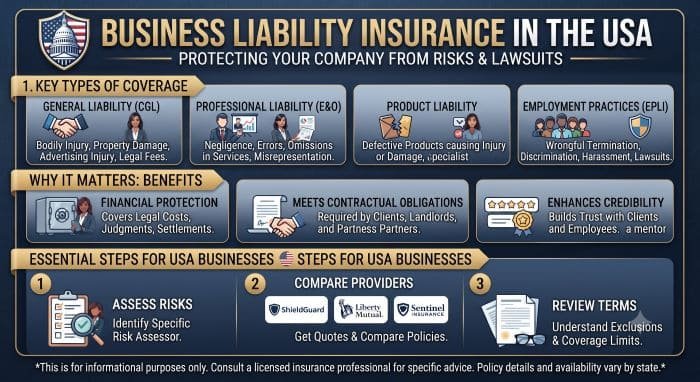
Introduction
Running a business comes with opportunities—and risks. A single customer injury, property damage claim, or lawsuit could result in significant legal expenses and financial losses. That’s why business liability insurance is one of the most important types of coverage for companies of every size.
Whether you own a retail store, restaurant, construction company, consulting firm, or online business, liability insurance helps protect your finances and reputation when unexpected claims arise.
This guide explains how business liability insurance works, the different types of coverage available, factors that affect premiums, and how to choose the right policy for your business in 2026.
What Is Business Liability Insurance?
Business liability insurance helps protect your company against claims made by third parties for bodily injury, property damage, or certain legal disputes arising from your business operations.
If your business is sued, liability insurance may help cover:
- Legal defense costs
- Court expenses
- Settlement payments
- Judgments (up to policy limits)
- Medical expenses for injured third parties
Without adequate coverage, even one lawsuit could place significant financial pressure on a small business.
Why Every Business Needs Liability Insurance
No business is completely free from risk. Even companies with excellent safety practices may face unexpected accidents or legal claims.
Business liability insurance helps protect against situations such as:
- Customer injuries on your property
- Damage to a client’s property
- Advertising injury claims
- Product-related lawsuits
- Professional negligence claims
Many landlords, lenders, and business partners also require proof of liability insurance before signing contracts.
Types of Business Liability Insurance
General Liability Insurance
General liability insurance is the foundation of business protection.
It commonly covers:
- Bodily injury claims
- Property damage
- Legal defense costs
- Personal and advertising injury
- Medical payments
Example
If a customer slips and falls inside your store, general liability insurance may help cover medical bills and legal expenses if a claim is filed.
Professional Liability Insurance (Errors & Omissions)
Professional liability insurance—also known as Errors and Omissions (E&O) insurance—protects businesses that provide professional advice or services.
It may cover claims involving:
- Professional negligence
- Errors in professional services
- Missed deadlines
- Misrepresentation
- Failure to deliver contracted services
Businesses That Often Need E&O Insurance
- Consultants
- Accountants
- Real estate professionals
- Architects
- Engineers
- IT companies
- Marketing agencies
Product Liability Insurance
Businesses that manufacture, distribute, or sell physical products should consider product liability insurance.
Coverage may apply if a product causes:
- Personal injury
- Property damage
- Product defect claims
- Failure-to-warn lawsuits
Even retailers may be named in lawsuits involving defective products.
Cyber Liability Insurance
As cyber threats continue to grow, many businesses purchase cyber liability insurance.
This coverage may help with:
- Data breaches
- Ransomware attacks
- Customer notification costs
- Data recovery
- Legal expenses related to cyber incidents
For businesses that store customer information online, cyber liability coverage has become increasingly important.
Commercial Umbrella Insurance
Commercial umbrella insurance provides additional liability protection beyond the limits of your existing policies.
It can help businesses facing large lawsuits that exceed their primary insurance coverage.
Business Owner’s Policy (BOP)
Many small businesses choose a Business Owner’s Policy (BOP), which combines several types of coverage into one convenient package.
A BOP typically includes:
- General liability insurance
- Commercial property insurance
- Business interruption coverage
Bundling policies can often reduce overall insurance costs.
Industries That Need Business Liability Insurance
Nearly every business can benefit from liability coverage, including:
- Retail stores
- Restaurants
- Construction companies
- Contractors
- Healthcare providers
- Professional service firms
- Manufacturers
- Technology companies
- E-commerce businesses
- Cleaning companies
What Factors Affect Insurance Costs?
Insurance companies calculate premiums based on several factors.
Common pricing factors include:
- Industry type
- Business size
- Annual revenue
- Number of employees
- Claims history
- Business location
- Coverage limits
- Deductible amount
Higher-risk industries generally pay higher premiums.
How to Lower Your Business Insurance Premium
You may be able to reduce costs by:
- Implementing workplace safety programs
- Training employees regularly
- Maintaining a claims-free history
- Choosing higher deductibles
- Bundling multiple policies
- Comparing quotes from multiple insurers
- Reviewing coverage annually
Good risk management can help lower premiums over time.
General Liability vs. Professional Liability
| General Liability | Professional Liability |
|---|---|
| Covers bodily injury | Covers professional mistakes |
| Covers property damage | Covers negligence claims |
| Covers customer accidents | Covers service-related disputes |
| Common for all businesses | Common for service professionals |
Many businesses benefit from carrying both types of insurance.
Frequently Asked Questions
Is business liability insurance required?
Requirements vary by state and industry. Although it is not always legally required, many landlords, clients, and lenders require businesses to carry liability insurance.
How much does business liability insurance cost?
Premiums vary depending on your industry, location, business size, and coverage limits. Small businesses often pay a few hundred to several thousand dollars annually, depending on their level of risk.
Does general liability insurance cover employees?
No. Employee injuries are generally covered by workers’ compensation insurance rather than general liability insurance.
What is the difference between general liability and a Business Owner’s Policy?
General liability insurance covers third-party claims, while a Business Owner’s Policy combines general liability with commercial property insurance and, in many cases, business interruption coverage.
Should freelancers carry liability insurance?
Yes. Freelancers, consultants, and independent contractors can all face lawsuits related to their professional services and may benefit from appropriate liability coverage.
Final Thoughts
Business liability insurance is an essential part of protecting your company’s financial future. Whether you operate a small local business or a growing national company, the right insurance policy can help shield your business from unexpected legal claims and costly lawsuits.
Before purchasing coverage, compare quotes from several insurers, evaluate your risks, and choose policy limits that match your business operations. Working with a licensed insurance professional can help you select the coverage that best fits your industry and budget, giving you greater confidence as your business grows.